GEDITOK Blog
Insights on tokenization, traceability, sustainability and the future of commerce and industry
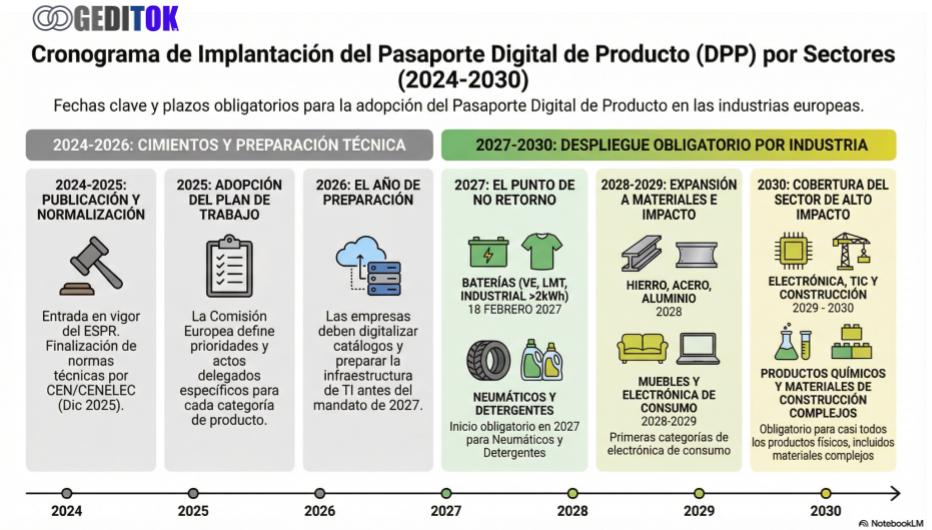
Digital Product Passport (DPP) Calendar: Sectoral Roadmap (2024-2030)
The digital and sustainable transformation of the European industry has a key date on the horizon: the arrival of the Digital Product Passport (DPP). This tool, designed to enhance traceability, circularity, and transparency, will not be implemented all at once across the market. Instead, its rollout will be staggered, depending on the approval of specific delegated acts and the maturity of each industry.
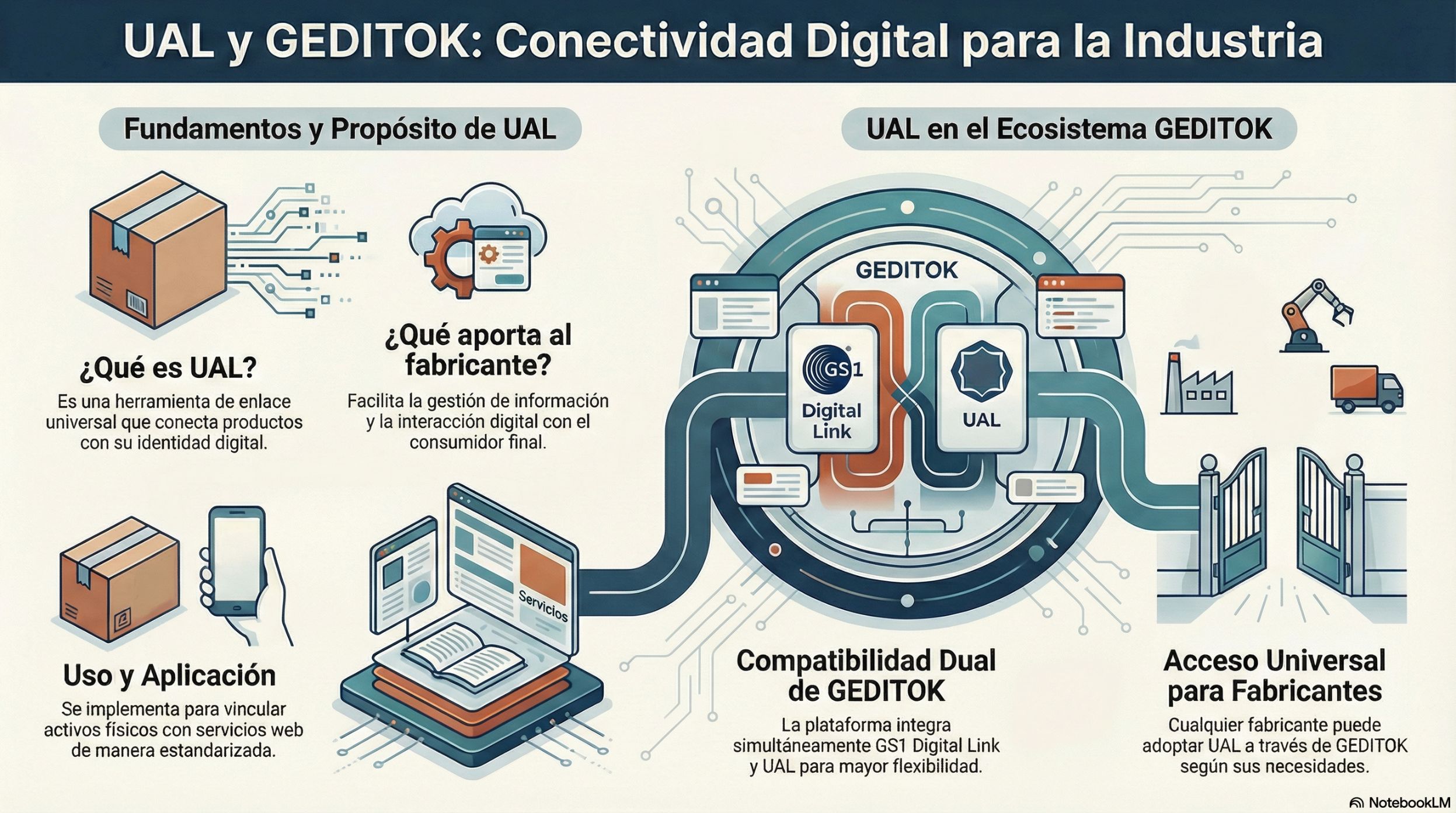
UAL: A Unique Identifier and Decentralized URL for Products
In the coming years, product traceability and transparency will shift from being a "nice to have" to becoming a basic market expectation, and in many sectors, a regulatory requirement. In the European Union, the ESPR framework (Ecodesign for Sustainable Products Regulation) drives the implementation of the Digital Product Passport (DPP) as a "digital identity document" for products, with relevant information on sustainability, circularity, and compliance. However, as companies move toward richer traceability models (history, events, maintenance, ownership changes, authenticity, recycling), a practical problem arises that is not always mentioned: what happens when a company is not affiliated with GS1 (or its branches) or, even if affiliated, it does not make sense to create a GTIN for all its products?

DPP Glossary: 100 Key Terms of the Digital Product Passport
Complete glossary with 100 essential terms about the Digital Product Passport (DPP) under the ESPR framework.

What is the Digital Product Passport?
Learn about the Digital Product Passport (DPP), the European tool that will transform transparency and sustainability in products.